

سُبْحَانَ الَّذِي سَخَّرَ لَنَا هَذَا وَمَا كُنَّا لَهُ مُقْرِنِينَ، وَإِنَّا إِلَى رَبِّنَا لَمُنْقَلِبُونَ
There are particular phrases taught by the Prophet Muhammad ﷺ to say at the start of a trip, and his companions recorded them. As such, many people want the travel duas in their originally recorded and thus most correct form. This form often includes the proper vowing. This booklet includes the travel dua, provides a word-for-word explanation of it, shows proper pronunciation, and includes other related duas.
Arabic Dua for Travelling: The Complete Text
اللَّهُ أَكْبَرُ، اللَّهُ أَكْبَرُ، اللَّهُ أَكْبَرُ
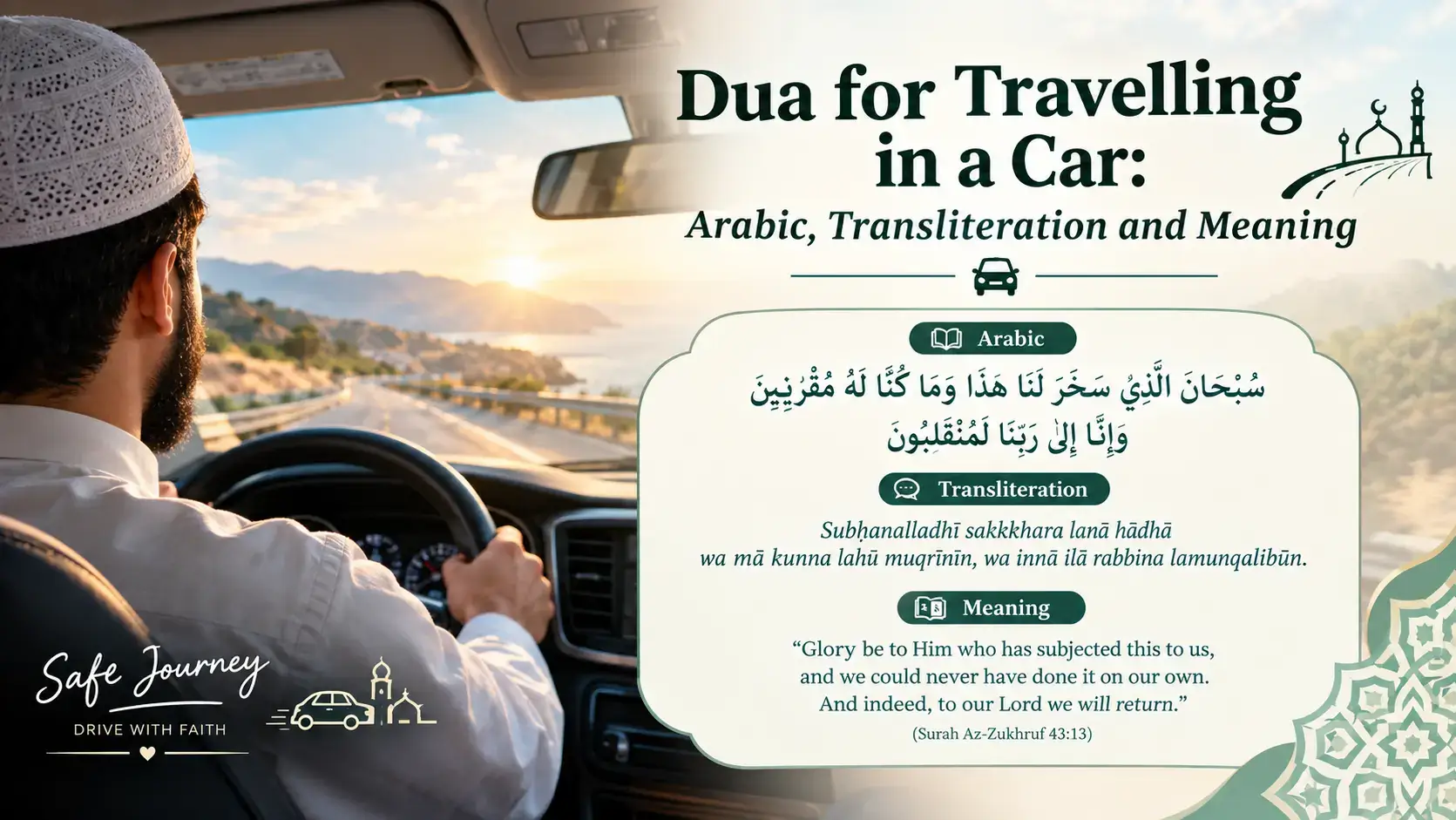
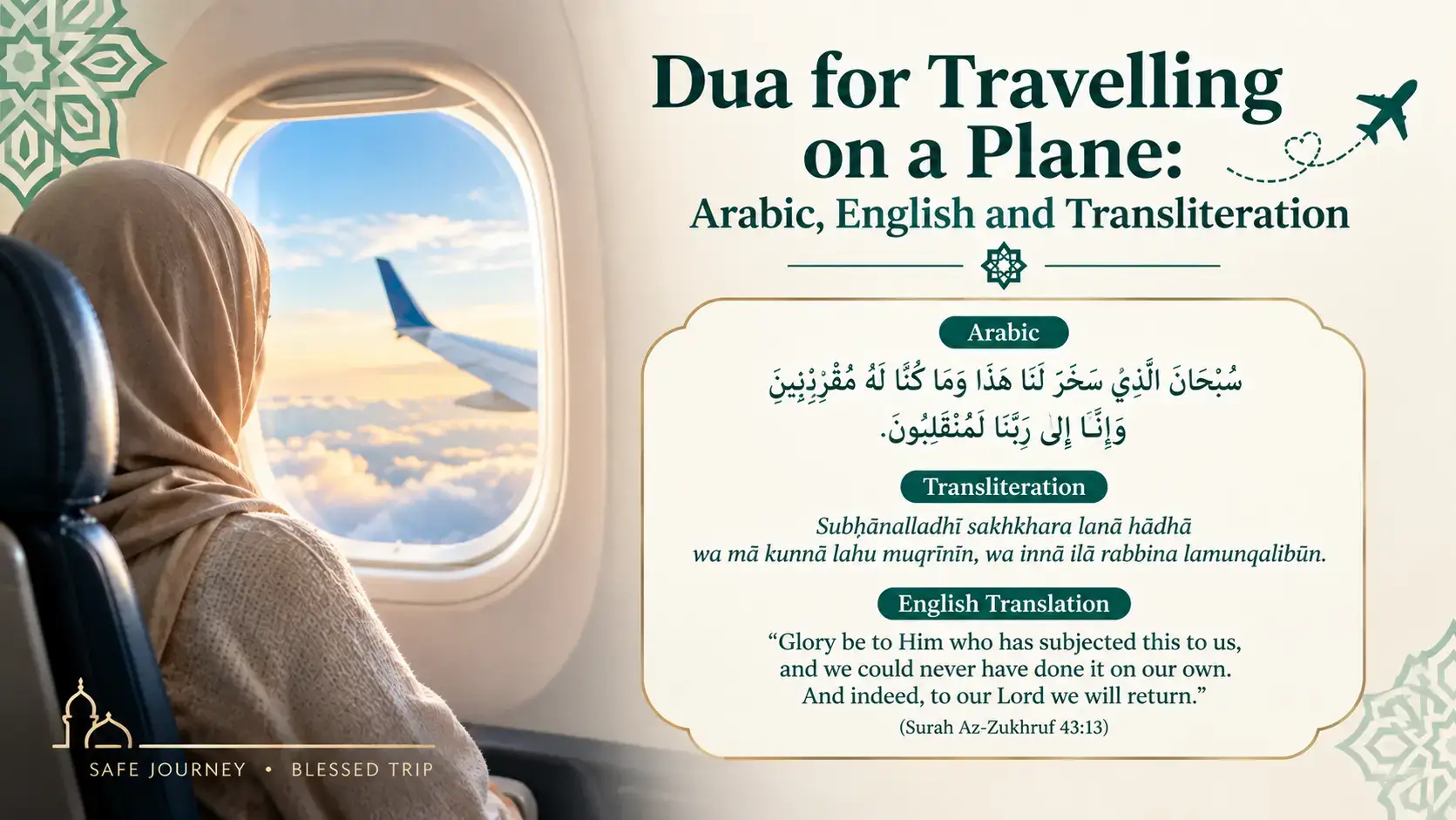
سُبْحَانَ الَّذِي سَخَّرَ لَنَا هَذَا وَمَا كُنَّا لَهُ مُقْرِنِينَ، وَإِنَّا إِلَى رَبِّنَا لَمُنْقَلِبُونَ
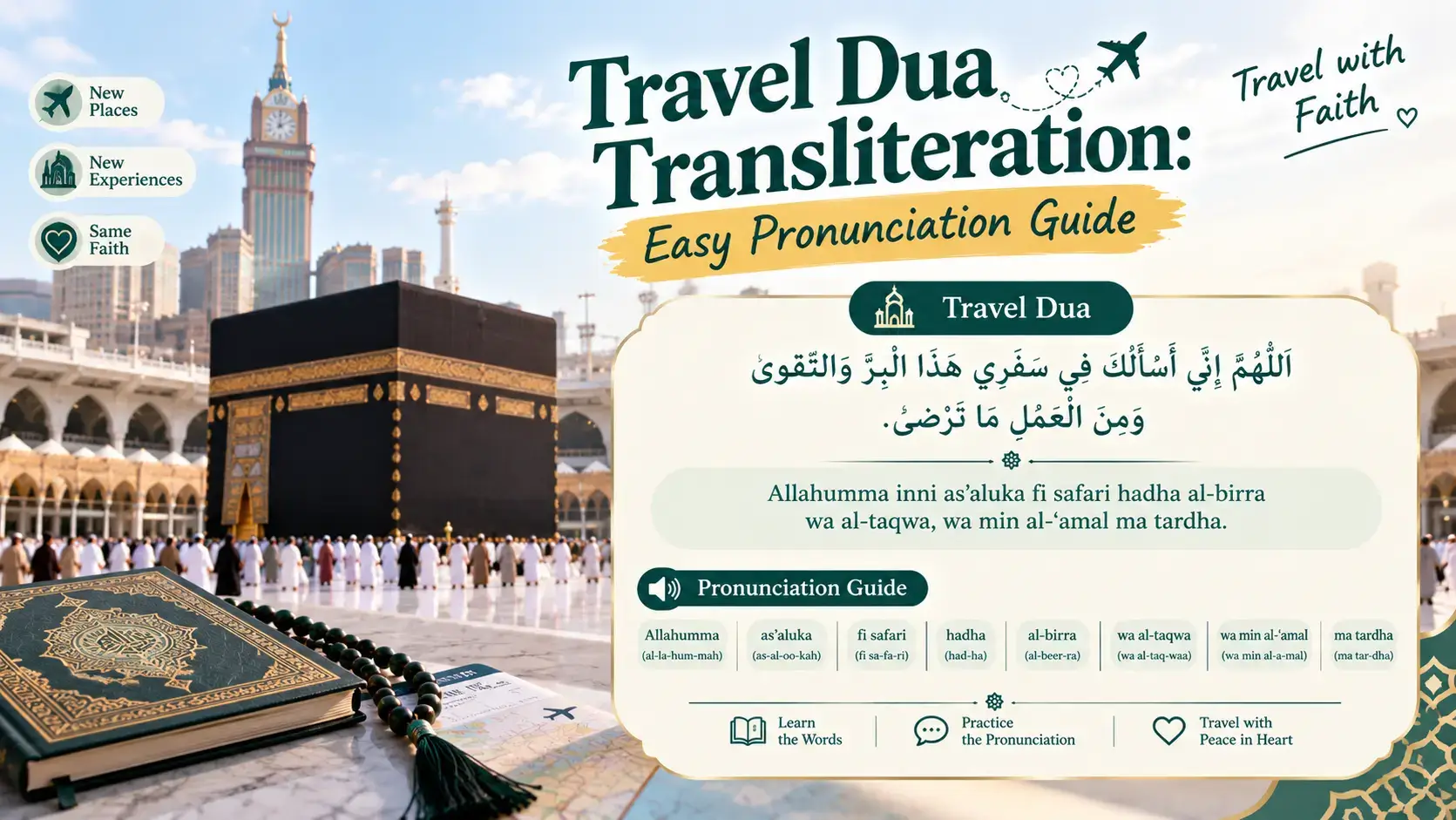
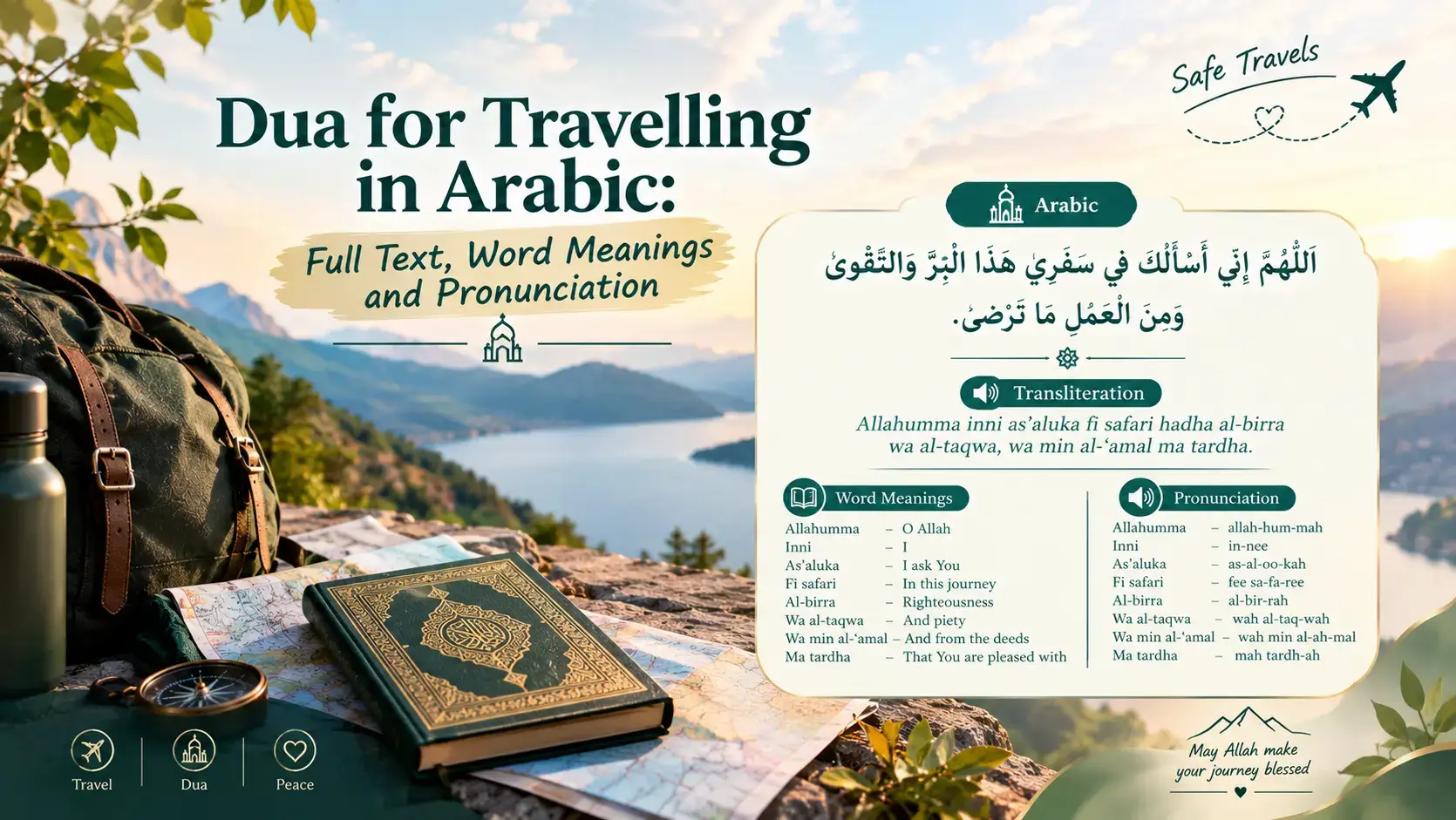
اللَّهُمَّ إِنَّا نَسْأَلُكَ فِي سَفَرِنَا هَذَا الْبِرَّ وَالتَّقْوَى، وَمِنَ الْعَمَلِ مَا تَرْضَى
اللَّهُمَّ هَوِّنْ عَلَيْنَا سَفَرَنَا هَذَا وَاطْوِ عَنَّا بُعْدَهُ
اللَّهُمَّ أَنْتَ الصَّاحِبُ فِي السَّفَرِ، وَالْخَلِيفَةُ فِي الأَهْلِ
اللَّهُمَّ إِنِّي أَعُوذُ بِكَ مِنْ وَعْثَاءِ السَّفَرِ، وَكَآبَةِ الْمَنْظَرِ، وَسُوءِ الْمُنْقَلَبِ فِي الْمَالِ وَالأَهْلِ
Muslim reports the traveling dua in this booklet in his Sahih from Ibn Umar. It states that the Prophet ﷺ said “Allahu Akbar” three times while on his mount. He then recited what comes after.
Dua for Travelling in Arabic: Why the Original Wording Matters
رَبَّنَا آتِنَا فِي الدُّنْيَا حَسَنَةً وَفِي الْآخِرَةِ حَسَنَةً وَقِنَا عَذَابَ النَّارِ
There are slight differences in the ways people in different countries write English phrases. For example, people in the U.S. and Canada often type the phrase “dua for travelling in Arabic”, while people in Britain, the South and the Gulf write “dua for travelling in Arabic”. Both, however, refer to the same phrase. The phrase is very easy to memorise because of its poetic nature. Once it is memorised, one can add personal, supplemental requests in any language they prefer.
Travel Dua in Arabic Text: Word-by-Word Meaning
وَمَا كُنَّا لَهُ مُقْرِنِينَ
To understand the travel dua instead of just writing it, use the table below for the translation of key words:
| Arabic | Meaning |
| سُبْحَانَ | Glory be to declaring Allah free of every flaw. |
| الَّذِي | the One who |
| سَخَّرَ | made subservient, put under our control |
| مُقْرِنِينَ | able to control or subdue |
| مُنْقَلِبُونَ | those who will return |
| الْبِرَّ | goodness, righteousness |
| التَّقْوَى | God-consciousness, piety |
| هَوِّنْ | make easy |
| اطْوِ | fold up, shorten |
| بُعْدَهُ | its distance |
| الصَّاحِبُ | the companion |
| الْخَلِيفَةُ | the one who stands in for the guardian |
| وَعْثَاءِ | hardship, strain |
| كَآبَةِ الْمَنْظَرِ | a sorrowful sight |
| سُوءِ الْمُنْقَلَبِ | an evil outcome on return |
Dua for Travel in Arabic and English
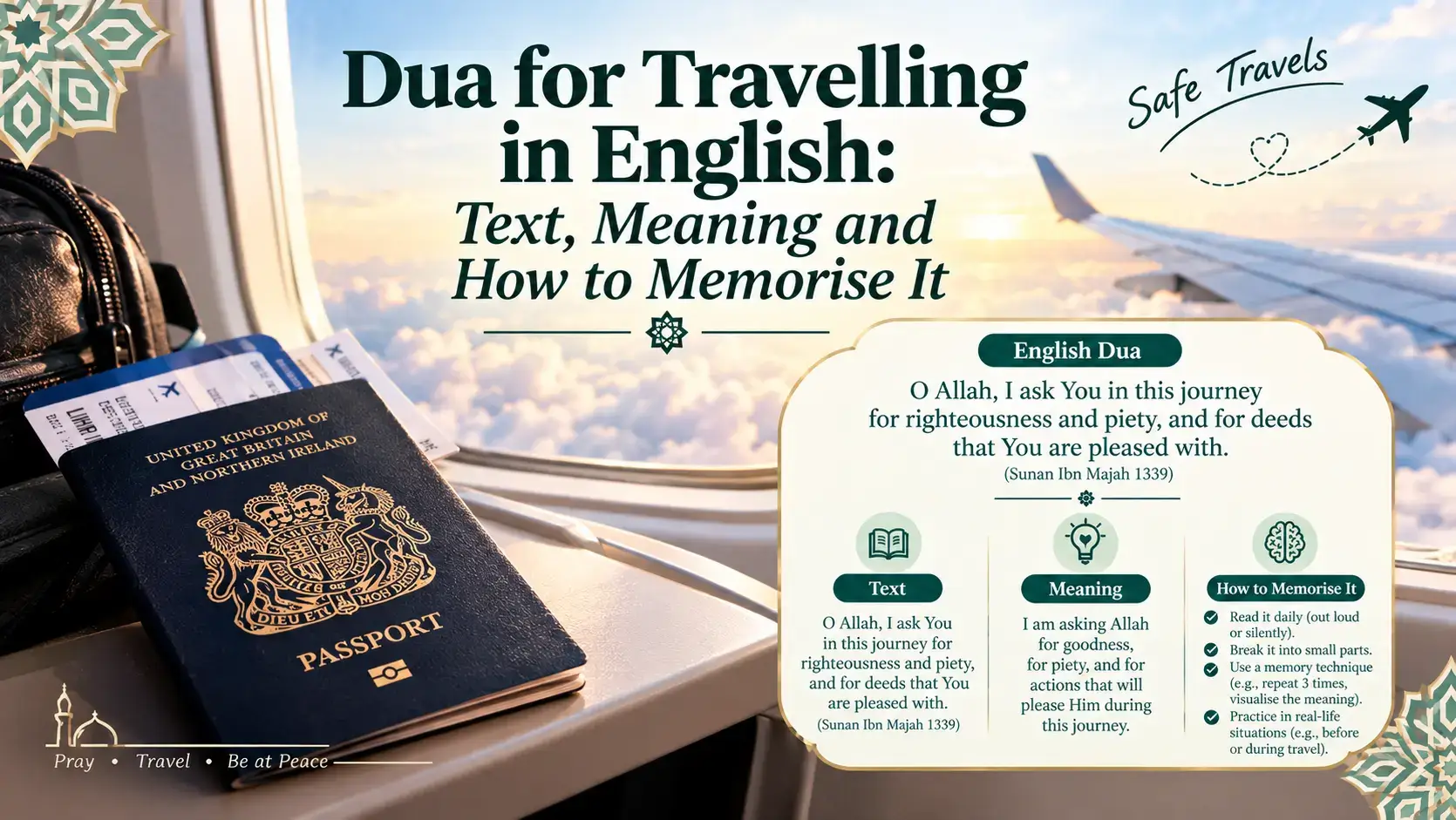
اللَّهُمَّ إِنَّا نَسْأَلُكَ فِي سَفَرِنَا هَذَا الْبِرَّ وَالتَّقْوَى
There is a lot of demand for the travel dua in Arabic with English translation so that it may be learned by heart in the process of recitation.
| Arabic | Transliteration | English |
| اللَّهُ أَكْبَرُ (×3) | Allahu Akbar | Allah is the Greatest |
| سُبْحَانَ الَّذِي سَخَّرَ لَنَا هَذَا وَمَا كُنَّا لَهُ مُقْرِنِينَ | Subhanal-ladhi sakhkhara lana hadha wa ma kunna lahu muqrinin | Glory to Him who subjected this to us; we could never have done it ourselves |
| وَإِنَّا إِلَى رَبِّنَا لَمُنْقَلِبُونَ | Wa inna ila Rabbina lamunqalibun | And to our Lord we will surely return |
| اللَّهُمَّ إِنَّا نَسْأَلُكَ فِي سَفَرِنَا هَذَا الْبِرَّ وَالتَّقْوَى | Allahumma inna nas’aluka fi safarina hadhal-birra wat-taqwa | O Allah, on this journey we ask You for goodness and piety |
| وَمِنَ الْعَمَلِ مَا تَرْضَى | Wa minal-‘amali ma tarda | And for deeds that please You |
| اللَّهُمَّ هَوِّنْ عَلَيْنَا سَفَرَنَا هَذَا وَاطْوِ عَنَّا بُعْدَهُ | Allahumma hawwin ‘alayna safarana hadha watwi ‘anna bu’dah | Make this journey easy for us and shorten its distance |
| اللَّهُمَّ أَنْتَ الصَّاحِبُ فِي السَّفَرِ، وَالْخَلِيفَةُ فِي الأَهْلِ | Allahumma antas-sahibu fis-safar, wal-khalifatu fil-ahl | You are the Companion on the road and the Guardian of the family |
| اللَّهُمَّ إِنِّي أَعُوذُ بِكَ مِنْ وَعْثَاءِ السَّفَرِ، وَكَآبَةِ الْمَنْظَرِ، وَسُوءِ الْمُنْقَلَبِ فِي الْمَالِ وَالأَهْلِ | Allahumma inni a’udhu bika min wa’tha’is-safar, wa ka’abatil-manzar, wa su’il-munqalabi fil-mali wal-ahl | I seek refuge in You from hardship of travel, a sorrowful sight, and an evil return in wealth and family |
Dua Before Travelling in Arabic: The Words for Leaving Home
بِسْمِ اللَّهِ، تَوَكَّلْتُ عَلَى اللَّهِ، وَلَا حَوْلَ وَلَا قُوَّةَ إِلَّا بِاللَّهِ
Bismillah, tawakkaltu ‘alallah, wa la hawla wa la quwwata illa billah.
The dua for travel in Arabic, likewise, is learnt by heart with its English translation. It is recommended to say this dua before departure from the house. According to a Hadith in Abu Daud and Tirmidhi, the person who says it is directed: “You are guided, protected and guarded”. Before a long journey, many people recite two units of prayer and offer some charity.
Dua When Travelling in Arabic: The Moment to Recite
سُبْحَانَ الَّذِي سَخَّرَ لَنَا هَذَا وَمَا كُنَّا لَهُ مُقْرِنِينَ
If you are asking what the dua when travelling in Arabic is at the moment of departure, you say the doorstep dua first, then the full travel dua once you are seated in the car, plane or train and the vehicle is about to move. No separate text is reported for each type of vehicle. The same words cover a car, a plane, a train and a ship, and for boats you may add the verse of Nuh (11:41).
Dua for Travelling on Plane and Car in Arabic
اللَّهُمَّ هَوِّنْ عَلَيْنَا سَفَرَنَا هَذَا وَاطْوِ عَنَّا بُعْدَهُ
The travel dua in Arabic for a plane journey is the first Prophetic tradition, and the travel dua in Arabic for a plane journey is the second Prophetic tradition. These are to be read while waiting to take off, with the seat belt fastened. It is permissible to save these on your phone before the flight and to read them during the journey.
The travel dua in Arabic for a car journey is the same. It is to be said as the car moves off and repeated by the driver during a long journey. For more about travel duas and transport, please see our articles ‘travel dua for plane‘ and ‘travel dua for car‘.
Dua for Safe Travel in Arabic
أَعُوذُ بِكَلِمَاتِ اللَّهِ التَّامَّاتِ مِنْ شَرِّ مَا خَلَقَ
A’udhu bikalimatillahit-tammati min sharri ma khalaq. (“I seek refuge in the perfect words of Allah from the evil of what He has created.”)
For a dua for safe travel in Arabic, add this supplication when you stop at a rest area, hotel or new place. The Prophet ﷺ said that whoever says it will not be harmed until they leave that place (Sahih Muslim). You can also recite Ayat al-Kursi (اللَّهُ لَا إِلَٰهَ إِلَّا هُوَ الْحَيُّ الْقَيُّومُ) and the morning and evening adhkar for protection.
Dua for Someone Travelling in Arabic
أَسْتَوْدِعُ اللَّهَ دِينَكَ وَأَمَانَتَكَ وَخَوَاتِيمَ عَمَلِكَ
Astawdi’ullaha dinaka wa amanataka wa khawatima ‘amalik. (“I entrust to Allah your religion, your trustworthiness and the last of your deeds.”)
The dua for travel in Arabic is the farewell taught by the Prophet ﷺ that is found in Abu Dawud and At-Tirmidhi. Those wanting a travel dua for a family member in Arabic can include the following dua that is found in At-Tirmidhi.
زَوَّدَكَ اللَّهُ التَّقْوَى، وَغَفَرَ ذَنْبَكَ، وَيَسَّرَ لَكَ الْخَيْرَ حَيْثُ مَا كُنْتَ
Zawwadakallahut-taqwa, wa ghafara dhanbak, wa yassara lakal-khayra haythu ma kunt. (“May Allah provide you with piety, forgive your sin and make goodness easy for you wherever you are.”) Use the masculine endings (-ka) for a man and the feminine endings (-ki) for a woman.
Dua for Traveller in Arabic: What the One Leaving Says
أَسْتَوْدِعُكُمُ اللَّهَ الَّذِي لَا تَضِيعُ وَدَائِعُهُ
Astawdi’ukumullahal-ladhi la tada’u wada’i’uh. (“I entrust you to Allah, whose trust is never lost.”)
A travelling dua in Arabic serves both ways. Whoever is saying farewell to the traveller states the aforementioned travelling dua. The traveller also states the following dua for the family. It is also mentioned in a hadith that the supplications of travellers are not rejected.
ثَلَاثُ دَعَوَاتٍ مُسْتَجَابَاتٌ لَا شَكَّ فِيهِنَّ: دَعْوَةُ الْمَظْلُومِ، وَدَعْوَةُ الْمُسَافِرِ، وَدَعْوَةُ الْوَالِدِ عَلَى وَلَدِهِ
Travelling Dua in Arabic from the Quran
رَبِّ أَدْخِلْنِي مُدْخَلَ صِدْقٍ وَأَخْرِجْنِي مُخْرَجَ صِدْقٍ وَاجْعَلْ لِي مِن لَّدُنكَ سُلْطَانًا نَّصِيرًا
Rabbi adkhilni mudkhala sidqin wa akhrijni mukhraja sidqin waj’al li min ladunka sultanan nasira (Quran 17:80).
The travelling dua in Arabic draws on three Quranic passages. Surah Az-Zukhruf (43:13-14) gives the opening verse. Surah Hud (11:41) gives the dua for boats: بِسْمِ اللَّهِ مَجْرَاهَا وَمُرْسَاهَا إِنَّ رَبِّي لَغَفُورٌ رَحِيمٌ. Surah Al-Isra (17:80), shown above, asks for a good entrance and a good exit.
حَسْبُنَا اللَّهُ وَنِعْمَ الْوَكِيلُ
These supplications have many names. A travelling dua in Arabic is also a travelling dua. A travel dua in Arabic also means the supplications on this page.
Due to the short nature of these supplications, they can be used in any condition. But it is better to say the full supplication if time permits. A very short supplication is “hasbunallahu wa ni’mal-wakil”, which means “Allah is sufficient for us, and He is the best disposer of affairs”.
How to Pronounce the Arabic Travel Dua Correctly
رَبِّ اشْرَحْ لِي صَدْرِي وَيَسِّرْ لِي أَمْرِي
Rabbi ishrah li sadri wa yassir li amri. (“My Lord, expand my chest and make my task easy for me.”)
Practical tips for the learner:
- Heavy letters: Give a full, deep sound to ص in الصَّاحِبُ, ط in وَاطْوِ and ظ in الْمَنْظَرِ.
- The deep ق: In التَّقْوَى and مُنْقَلِبُونَ, the qaf comes from the back of the throat, not from the front like a “k”.
- Doubled letters (shaddah): In سَخَّرَ and هَوِّنْ, hold the doubled letter slightly longer.
- The ع sound: In وَعْثَاءِ and عَلَيْنَا, produce the sound from the throat. A quick “a” is not enough.
- The ending ـونَ: In مُنْقَلِبُونَ, stretch the و for two counts.
- Listen first: Play a reliable reciter once, then repeat one phrase at a time.
A Simple Plan to Memorise the Arabic Dua
رَبَّنَا تَقَبَّلْ مِنَّا إِنَّكَ أَنتَ السَّمِيعُ الْعَلِيمُ
- Day 1: Learn the opening verse (سُبْحَانَ الَّذِي…) and say it ten times.
- Day 2: Add اللَّهُمَّ إِنَّا نَسْأَلُكَ… through مَا تَرْضَى.
- Day 3: Add the line about ease and distance.
- Day 4: Add the last two lines about the companion and refuge.
- Day 5: Recite the whole dua from memory.
Dua on Returning Home in Arabic
آيِبُونَ تَائِبُونَ عَابِدُونَ لِرَبِّنَا حَامِدُونَ
Ayibuna ta’ibuna ‘abiduna li-Rabbina hamidun. (“We return, repenting, worshipping and praising our Lord.”)
When the Prophet ﷺ returned from a journey, he repeated the travel dua and added these words. Say them when you arrive home safely.
Conclusion
اللَّهُمَّ إِنَّا نَسْأَلُكَ فِي سَفَرِنَا هَذَا الْبِرَّ وَالتَّقْوَى، وَمِنَ الْعَمَلِ مَا تَرْضَى
The dua for travelling in Arabic is short, beautiful and within reach of every Muslim. Learn the words, understand their meanings, recite them with presence of heart, and carry them on every journey. May Allah make all your journeys safe, easy and blessed. Ameen.
Frequently Asked Questions
Is the Arabic wording required?
The Arabic is the Prophetic text and is preferred. If you cannot say it yet, start with what you know, use the transliteration, and also ask Allah in your own language.
Is there a different Arabic dua for each vehicle?
No. The same dua applies to cars, planes, trains and ships.
When do I say it?
Once you are seated and the vehicle is about to move, after saying the dua for leaving the house.
What if I mispronounce a word?
Keep practising with a reliable reciter. Allah knows your effort, and the learner is rewarded for trying.